Best Practices for Effective Oracle Database Management
Oracle Database Administration (DBA) is crucial for organizations that depend on Oracle databases. As data volumes grow, establishing effective management practices becomes increasingly important. In this blog, we will discuss best practices that every Oracle DBA should adopt to ensure their databases are dependable, high-performing, and secure. If you want to excel in this career path, then it is recommended that you upgrade your skills and knowledge regularly with the latest Oracle Certification Course.
1. Emphasize Regular Backup and Recovery Solutions
A key responsibility of any DBA is to manage backups effectively. Consistent backups are vital for protecting data from loss due to corruption, hardware failures, or disasters.
Best Practices:
- Automate Backup Procedures: Use Oracle RMAN (Recovery Manager) to automate routine backups, scheduling them during off-peak hours to minimize impact.
- Conduct Regular Recovery Tests: Frequently practice restoring backups to confirm your recovery plan’s effectiveness and ensure your team is prepared.
2. Commit to Continuous Performance Monitoring and Tuning
Performance issues can significantly impact user satisfaction and the efficiency of operations. Ongoing monitoring and optimization are essential for maintaining database health.
Best Practices:
- Utilize Monitoring Tools: Leverage Oracle Enterprise Manager or AWR (Automatic Workload Repository) reports to continuously track performance metrics.
- Optimize Query Performance: Regularly review and improve slow-running queries through indexing or by rewriting SQL statements for efficiency.
3. Implement Strong Security Measures and User Management
Protecting sensitive data is critical in today’s digital environment. Robust security measures are necessary to safeguard against unauthorized access.
Best Practices:
- Establish Role-Based Access Control: Limit permissions based on user roles to effectively protect sensitive information.
- Review Password Policies Regularly: Enforce strong password guidelines and require periodic updates to enhance overall security.
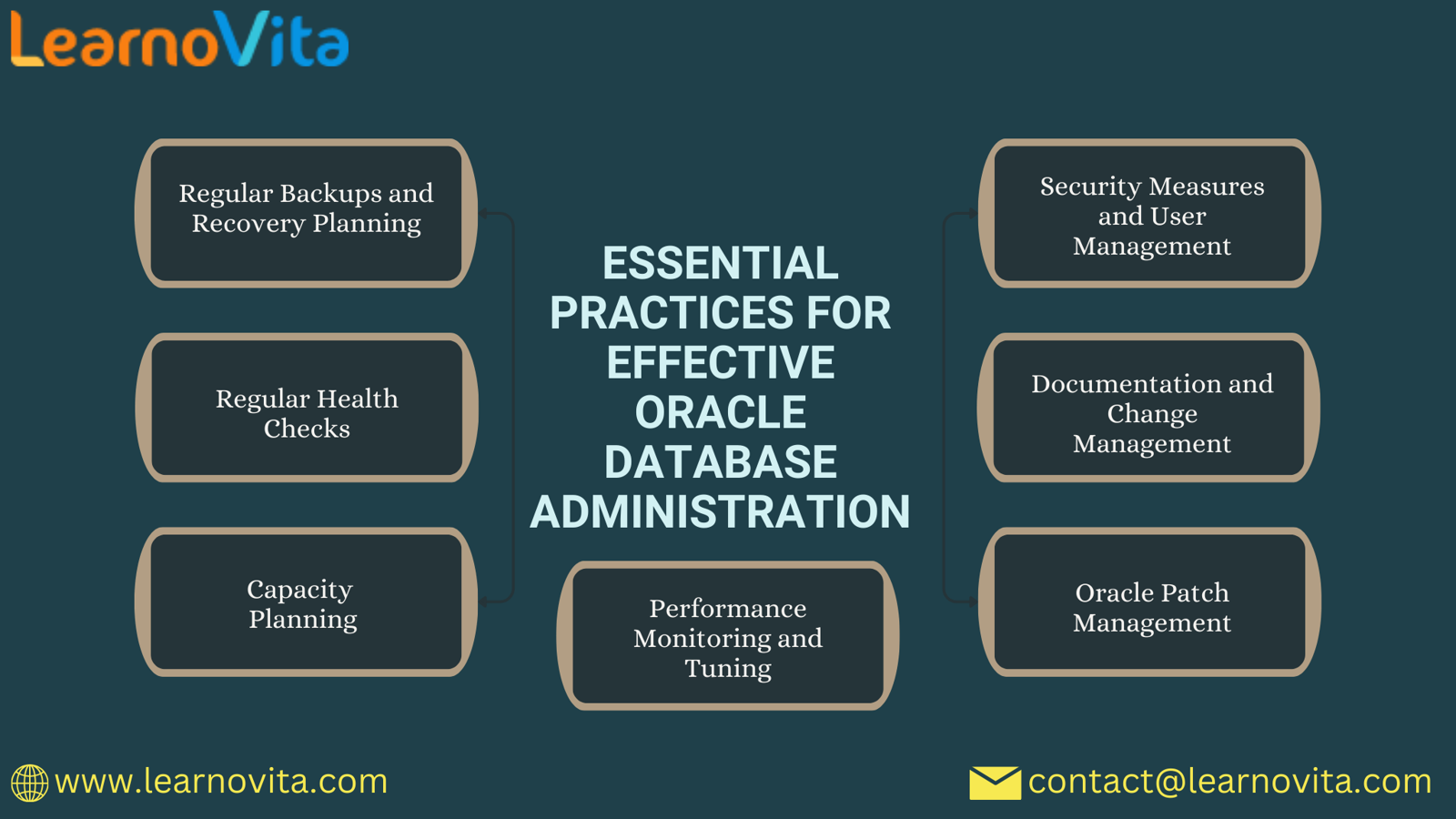
4. Maintain Thorough Documentation and Change Management
Clear documentation and systematic change management are vital for seamless database operations and troubleshooting.
Best Practices:
- Keep Detailed Records: Document configurations, changes, and procedures comprehensively to facilitate audits and recovery efforts.
- Utilize Change Management Tools: Implement systems to track changes in the database environment, minimizing risks during updates.
5. Stay Proactive with Oracle Patch Management
Regularly applying patches is essential for safeguarding against vulnerabilities and bugs in Oracle software.
Best Practices:
- Stay Updated: Subscribe to Oracle’s security advisories and newsletters to keep informed about the latest patches.
- Test Patches Before Implementing: Always validate patches in a staging environment prior to deploying them in production.
6. Engage in Strategic Capacity Planning
Effective capacity planning ensures that the database environment can handle growth without impacting performance.
Best Practices:
- Monitor Resource Utilization Trends: Track disk space, CPU, and memory usage to anticipate when upgrades might be needed.
- Design for Scalability: Structure your database infrastructure with future growth in mind to facilitate easier expansions.
7. Conduct Routine Health Assessments
Regular health checks can help identify issues before they turn into major problems.
Best Practices:
- Perform Comprehensive Health Evaluations: Periodically assess indexes, tables, and overall data integrity to maintain optimal performance.
- Leverage Diagnostic Tools: Utilize Oracle’s built-in diagnostic tools to proactively detect and resolve common issues.
Conclusion
Adopting these best practices will significantly enhance your Oracle database management, creating a more secure, efficient, and reliable database environment. As the field of data management evolves, staying informed and adapting to new technologies will further bolster your skills as an Oracle DBA. By committing to these practices, you will ensure that your databases remain resilient and high-performing, supporting your organization’s success.


Comments
Post a Comment