Utilizing Business Analytics: A Pathway to Small Business Success
- Get link
- X
- Other Apps

What Is Business Analytics?
Business analytics is the practice of using statistical analysis and data modeling to understand business performance and drive strategic decisions. For small businesses, this means unlocking valuable insights from the data they collect—whether from sales transactions, customer interactions, or web analytics.
Why Business Analytics Matters for Small Businesses
-
Enhanced Decision-Making: With analytics, small business owners can make data-driven decisions that reduce risk and improve outcomes. This leads to more effective strategies and resource allocation.
-
Deep Customer Understanding: Analyzing customer data helps businesses identify trends and preferences, allowing them to tailor products and services to better meet customer needs.
-
Operational Improvements: Identifying inefficiencies through data analysis can lead to workflow optimizations. This, in turn, can reduce costs and improve service delivery.
-
Market Competitiveness: By staying informed about market trends and consumer behavior, small businesses can adapt quickly and maintain a competitive edge.
Steps to Effectively Utilize Business Analytics
1. Define Your Goals
Start by outlining what you hope to achieve with business analytics. Whether it’s increasing sales, enhancing customer satisfaction, or optimizing your supply chain, having clear goals will guide your analytics efforts.
2. Gather Relevant Data
Collect data from multiple sources, including:
- Sales Transactions: Analyze what products are selling well and which are not.
- Customer Feedback: Use surveys and online reviews to gauge customer sentiment.
- Web Analytics: Platforms like Google Analytics provide insights into user behavior on your website.
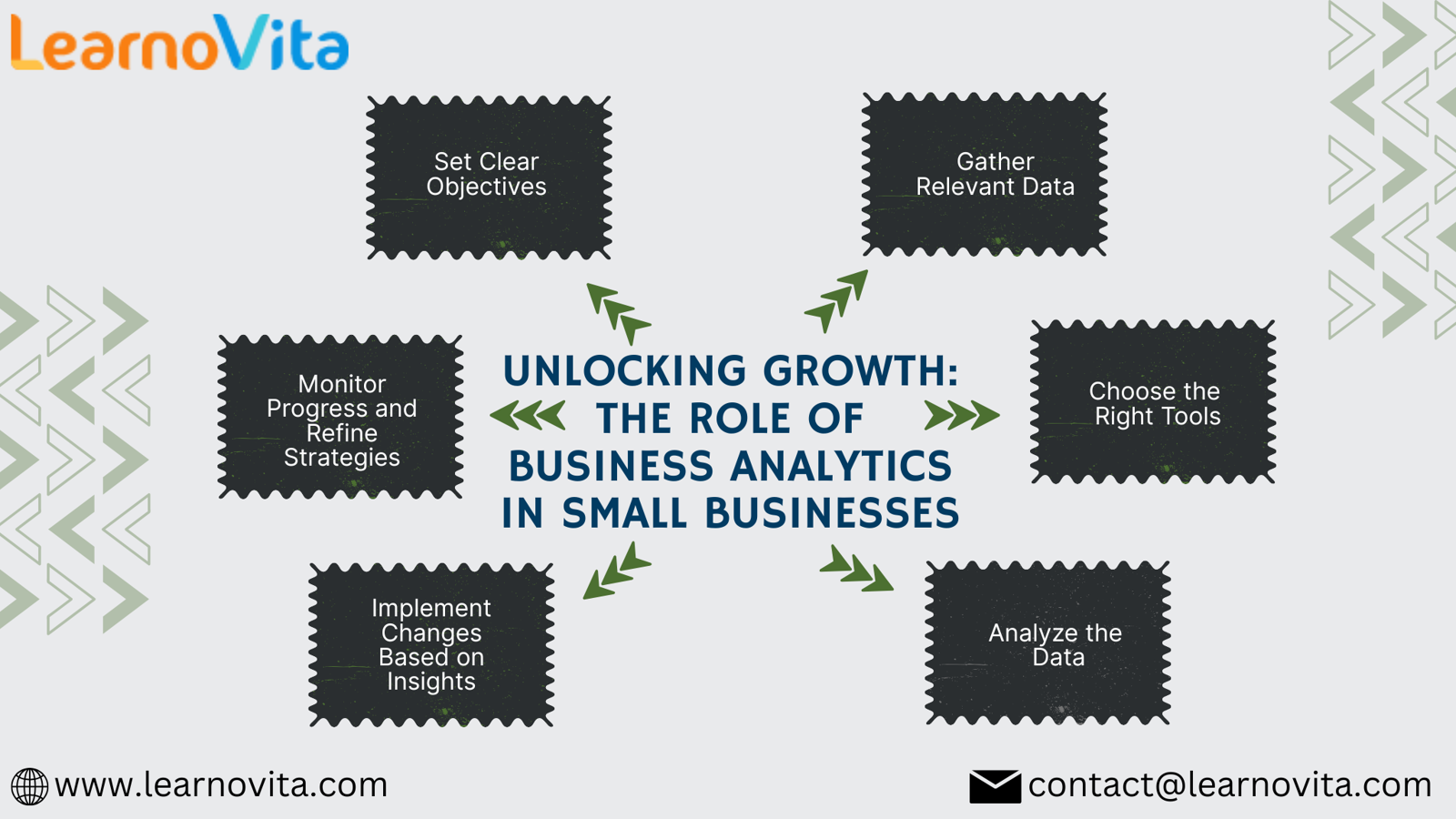
3. Choose the Right Analytics Tools
Select tools that align with your business needs. Consider options such as:
- CRM Systems: These track customer interactions and sales data.
- Business Intelligence Software: Tools like Tableau or Power BI can visualize data trends effectively.
- Web Analytics Tools: Such as Google Analytics for tracking online activity.
4. Analyze the Data
Once you’ve gathered your data, analyze it to uncover insights. Look for trends, patterns, and correlations that inform your business decisions. Key metrics to focus on might include:
- Customer acquisition costs
- Sales conversion rates
- Average order values
5. Implement Data-Driven Changes
Act on the insights gained from your analysis. Consider making adjustments such as:
- Changing marketing strategies to target specific customer segments.
- Modifying inventory based on purchasing patterns.
- Enhancing customer service protocols based on feedback.
6. Monitor and Adjust
Business analytics is an ongoing process. Continuously monitor your key performance indicators (KPIs) and be ready to adapt your strategies based on new insights. Flexibility allows businesses to respond effectively to market changes.
Success Story: A Small Business Transformation
Consider a local gym that was struggling to retain members. By utilizing business analytics to analyze membership data, they discovered that many members dropped out after a few months.
The gym implemented targeted retention strategies based on this data, such as personalized follow-ups and special incentives for participation in classes. As a result, they saw a marked increase in member retention and overall satisfaction, demonstrating how analytics can directly impact success.
Conclusion
Utilizing business analytics is a powerful pathway to success for small businesses. By turning data into actionable insights, enterprises can make informed decisions, enhance customer experiences, and improve operational efficiency.
With clear objectives and the right tools in place, small businesses can harness the potential of analytics to thrive in today’s competitive environment. Embrace the journey of data utilization—your pathway to success awaits!
- Get link
- X
- Other Apps


Comments
Post a Comment