A Beginner's Guide to Software Testing: Essential Insights for New Testers

What is Software Testing?
Software testing involves evaluating a software application or system to uncover defects or issues. The main goal is to confirm that the software behaves as anticipated, meets requirements, and performs reliably under various conditions. This process can be conducted using either manual or automated tools to ensure quality before the software is released.
Why is Software Testing Important?
- Quality Assurance: Testing ensures that the software product meets established quality standards.
- Cost Efficiency: Identifying and resolving bugs early in development is generally less expensive than fixing them post-release.
- User Experience: Comprehensive testing results in a superior user experience, fostering customer trust and loyalty.
- Risk Reduction: Detecting issues prior to deployment helps minimize risks associated with potential problems in production.
Key Concepts for New Testers
1. Software Development Life Cycle (SDLC)
Understanding the various phases of the SDLC—requirements gathering, design, implementation, testing, deployment, and maintenance—is vital. Familiarity with models like Agile and Waterfall empowers testers to effectively apply their testing skills at the right time.
2. Types of Testing
New testers should be knowledgeable about different testing types, including:
- Unit Testing: Evaluating individual components for specific functionalities.
- Integration Testing: Verifying that different system components operate together as expected.
- System Testing: Assessing the integrated software's compliance with specified requirements.
- User Acceptance Testing (UAT): Ensuring that the software meets user requirements prior to launch.
3. Test Case Design
Learning to create effective test cases is essential. A well-crafted test case typically includes:
- Test Case ID
- Description of the functionality being assessed
- Preconditions
- Step-by-step execution process
- Expected results
- Actual outcomes
4. Defect Tracking
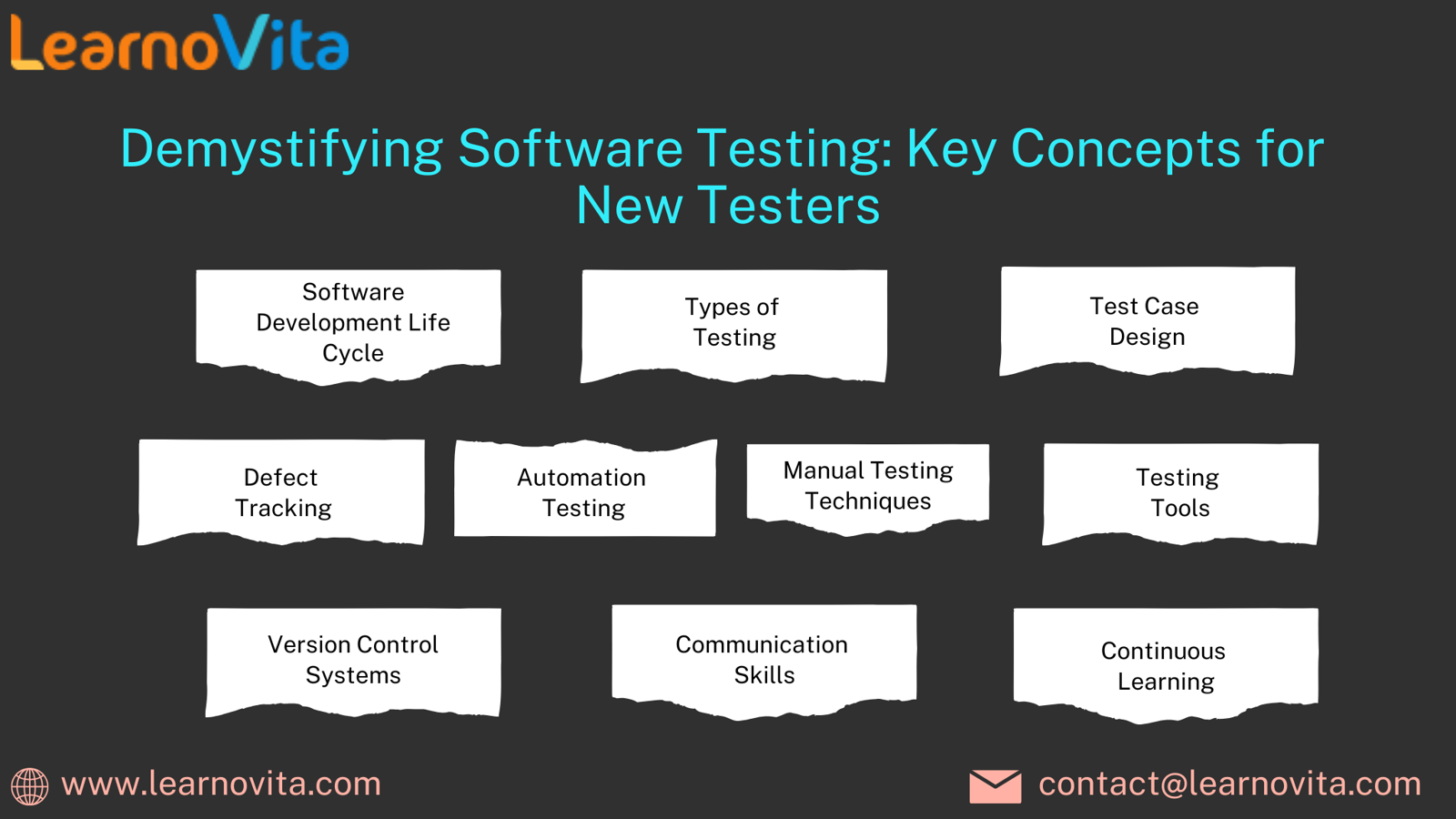
5. Automation Testing Basics
Gain introductory knowledge of automation testing tools like Selenium, TestNG, or JUnit. Automation significantly boosts efficiency for repetitive tasks and regression testing.
6. Manual Testing Techniques
Enhance your skills in manual testing, especially exploratory testing, where testers actively engage with the application to uncover unexpected defects.
7. Familiarity with Testing Tools
Understanding various testing tools is crucial. In addition to automation tools, explore performance testing tools (e.g., JMeter) and security testing tools (e.g., OWASP ZAP).
8. Version Control Awareness
Get to know version control systems like Git. Managing code changes effectively is essential for collaboration with developers.
9. Strong Communication Skills
Effective communication is a key asset in testing roles. Clearly articulating issues, working collaboratively, and engaging with various stakeholders is essential. Proper reporting of defects and testing results fosters team alignment.
10. Commitment to Continuous Learning
The technology landscape is constantly evolving. Embrace ongoing learning through online courses, workshops, and certifications. Keeping abreast of the latest methodologies and tools will ensure you remain competitive in the field.
Conclusion
Embarking on a career in software testing can be a rewarding journey. By mastering the core concepts and skills outlined in this guide, new testers can play a significant role in their teams and contribute to the delivery of high-quality software applications. Remember, testing is not just about identifying bugs; it’s also about providing reliable and user-friendly software.


Comments
Post a Comment