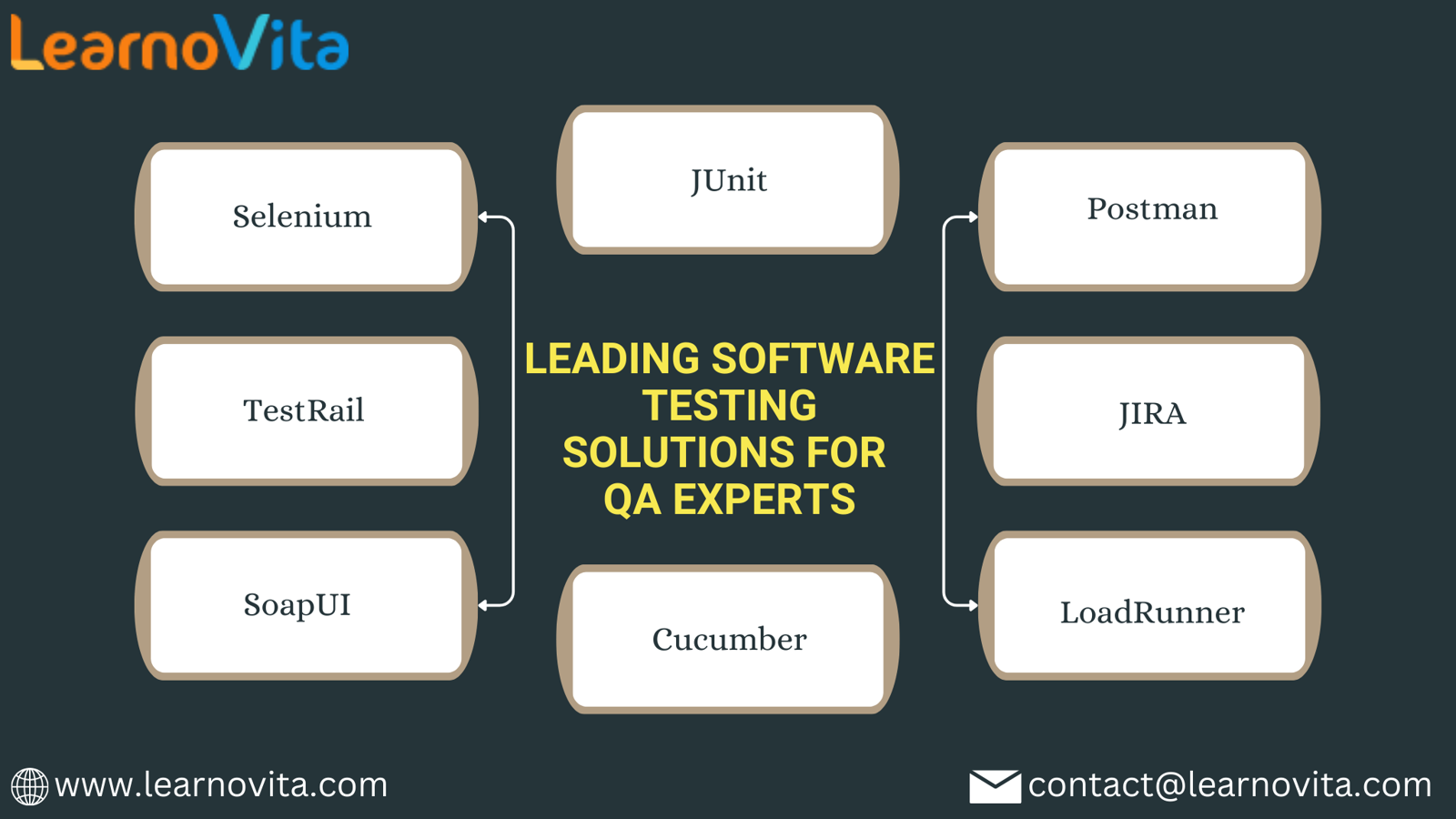
Indispensable Software Testing Tools for Quality Assurance Professionals

1. Selenium
Overview: Selenium is a leading open-source framework that facilitates automated testing across various web browsers.
Key Features:
- Supports multiple programming languages, including Java, Python, and C#.
- Delivers robust cross-browser testing capabilities.
- Offers flexibility in maintaining and updating test scripts.
Use Cases: Ideal for automating tests for web applications, especially when used alongside frameworks like TestNG or JUnit.
2. JUnit
Overview: JUnit is a foundational testing framework specifically crafted for Java applications and is widely recognized in the software community.
Key Features:
- Intuitive annotations make the test-writing process straightforward.
- Strong community backing and comprehensive documentation.
- Seamless integration with continuous integration (CI) tools such as Jenkins.
Use Cases: Best suited for executing unit tests in Java applications to maintain high code quality.
3. Postman
Overview: Postman is an essential tool for API testing, allowing users to send requests and easily assess responses.
Key Features:
- User-friendly interface for creating and managing requests.
- Supports test automation through scripting.
- Collaboration features that enhance team efficiency.
Use Cases: Particularly effective for testing RESTful APIs to ensure backend services operate as intended.
4. JIRA
Overview: While primarily a project management tool, JIRA offers robust test management features through add-ons like Zephyr.
Key Features:
- Integrates seamlessly with bug tracking systems for efficient issue management.
- Customizable workflows tailored to specific requirements.
- Facilitates real-time collaboration among team members.
5. LoadRunner
Overview: LoadRunner, developed by Micro Focus, is a comprehensive performance testing tool that simulates virtual users for load testing applications.
Key Features:
- Accommodates a wide range of application environments and protocols.
- Provides in-depth reporting and analytical insights.
- Capable of performing load and stress tests to validate application performance.
Use Cases: Essential for ensuring that applications can handle expected user loads without issues.
6. Cucumber
Overview: Cucumber is designed for Behavior-Driven Development (BDD), allowing teams to write clear, human-readable tests.
Key Features:
- Encourages collaboration between technical and non-technical team members.
- Compatible with multiple programming languages.
- Easily integrates into CI/CD workflows.
Use Cases: Ideal for Agile teams to promote clear communication of requirements and testing processes.
7. SoapUI
Overview: SoapUI is a powerful tool for API testing available in both open-source and professional versions.
Key Features:
- Comprehensive support for testing both SOAP and REST APIs.
- Provides effective automated functional testing.
- Options for customizable data-driven testing.
Use Cases: Best suited for teams requiring robust API testing capabilities within complex integrations.
8. TestRail
Overview: TestRail is a web-based test management tool that helps teams effectively organize and monitor their testing efforts.
Key Features:
- Customizable options for test case organization.
- Real-time reporting and analytics to track progress effectively.
- Integration with various development tools to streamline workflows.
Use Cases: Ideal for managing and tracking test cases in large-scale projects.
Conclusion
Selecting the right software testing tools is vital for the success of QA initiatives. Each tool provides unique strengths tailored to different testing needs, empowering QA professionals to enhance collaboration, boost accuracy, and ensure the delivery of high-quality software.
Stay updated on the latest trends in QA and consider incorporating these indispensable tools into your software testing strategy.


Comments
Post a Comment