Must-Know Frameworks and Libraries for Every Aspiring Full Stack Developer
1. React.js
Overview
React.js is a widely-used JavaScript library for building user interfaces, renowned for its component-based structure. Developed by Facebook, it empowers developers to create modular UI components and manage the rendering of the view layer effectively.
Importance
- Performance: React utilizes a virtual DOM to optimize updates, significantly enhancing application speed.
- Rich Ecosystem: With a vast community, React boasts an extensive ecosystem of tools like React Router and Redux for effective state management and routing.
2. Node.js
Overview
Node.js is a JavaScript runtime environment based on Chrome's V8 engine, enabling developers to run JavaScript on the server side. Its event-driven, non-blocking architecture makes it perfect for handling a multitude of connections at once.
Importance
- Unified Language: Node.js allows the use of JavaScript for both front-end and back-end development, streamlining the development process.
- API and Microservices: Ideal for building scalable RESTful APIs and modern web applications, fitting well into microservices architectures.
3. Express.js
Overview
Express.js is a lightweight and flexible web application framework for Node.js, offering a strong set of features for developing web and mobile applications. It helps in organizing server-side logic effectively.
Importance
- Middleware Support: With Express, developers can utilize middleware for structured application management and efficient request handling.
- Rapid Development: Its intuitive syntax and wide range of plugins accelerate the web application development process.
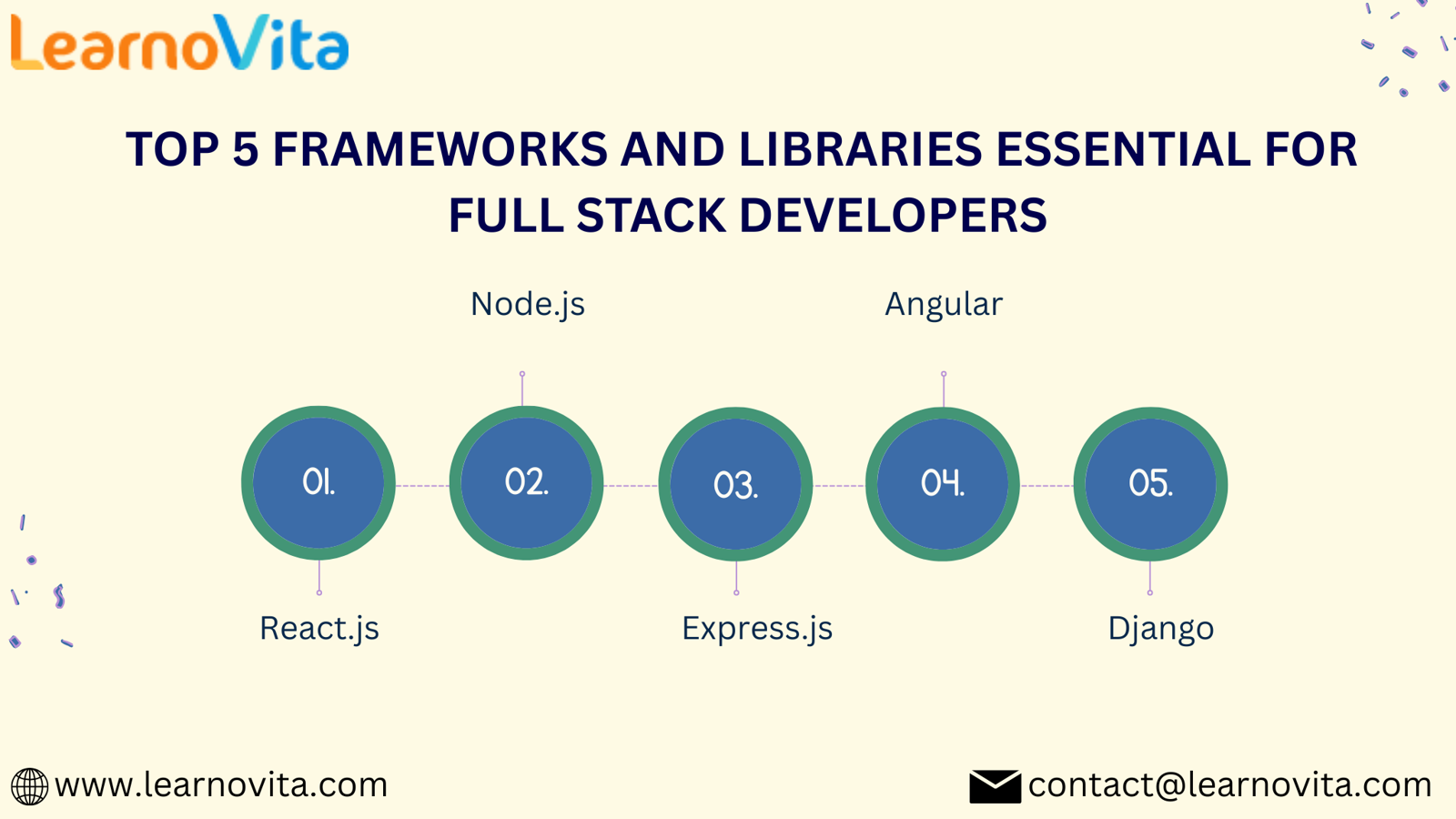
4. Angular
Overview
Angular is a robust platform and framework for creating client-side applications using HTML, CSS, and TypeScript. Backed by Google, it provides a solid foundation for large-scale application development.
Importance
- Two-Way Data Binding: Angular simplifies data management through its automatic synchronization between the model and view.
- Comprehensive Framework: As a full-featured framework, Angular offers a complete solution for crafting rich client-side applications.
5. Django
Overview
Django is a high-level Python web framework known for promoting rapid development and pragmatic design. It simplifies web application creation by offering numerous built-in features.
Importance
- Security Focused: Designed with security in mind, Django helps developers build secure applications and protect against common vulnerabilities.
- Built-In Admin Interface: Its admin interface streamlines data management, making it an excellent tool for rapid prototyping.
Conclusion
Becoming familiar with these frameworks and libraries significantly enhances a full stack developer's capability, enabling them to build powerful and scalable web applications. As technology evolves, keeping up with these essential tools will facilitate both personal and professional growth in web development. Whether you're new to the field or seeking to refine your skills, focusing on these five frameworks will prepare you for various challenges and help you thrive as a full stack developer.


Comments
Post a Comment