Family first | Mother | Wife | Digital Marketer.Follow us to read interesting and informative articles belong to diversified industry verticals to improve knowledge.
The Essential Guide to Data Wrangling: Elevate Your Data Science Skills
Get link
Facebook
X
Pinterest
Email
Other Apps
In the rapidly expanding realm of data science, the ability to expertly wrangle data is a critical skill that significantly boosts your analytical prowess. Data wrangling transforms chaotic, raw data into a structured format that is primed for insightful analysis. In this blog, we’ll delve into the significance of data wrangling, outline key techniques to master it, and share best practices for effective implementation. If you want to excel in this career path, then it is recommended that you upgrade your skills and knowledge regularly with the latest Data Science Course in Bangalore.
What Is Data Wrangling?
Data wrangling, often referred to as data munging, involves the processes of cleaning, transforming, and organizing raw data into a usable format for analysis. This essential step ensures that the data is high-quality and trustworthy, which ultimately impacts the insights you can derive.
Why Is Data Wrangling Important?
Improves Data Quality: High-quality, clean data serves as the backbone for accurate analysis and informed decisions.
Boosts Efficiency: Properly wrangled data expedites analysis, allowing more time for extracting valuable insights.
Builds Credibility: Reliable datasets inspire confidence in your findings, which is vital for garnering stakeholder support.
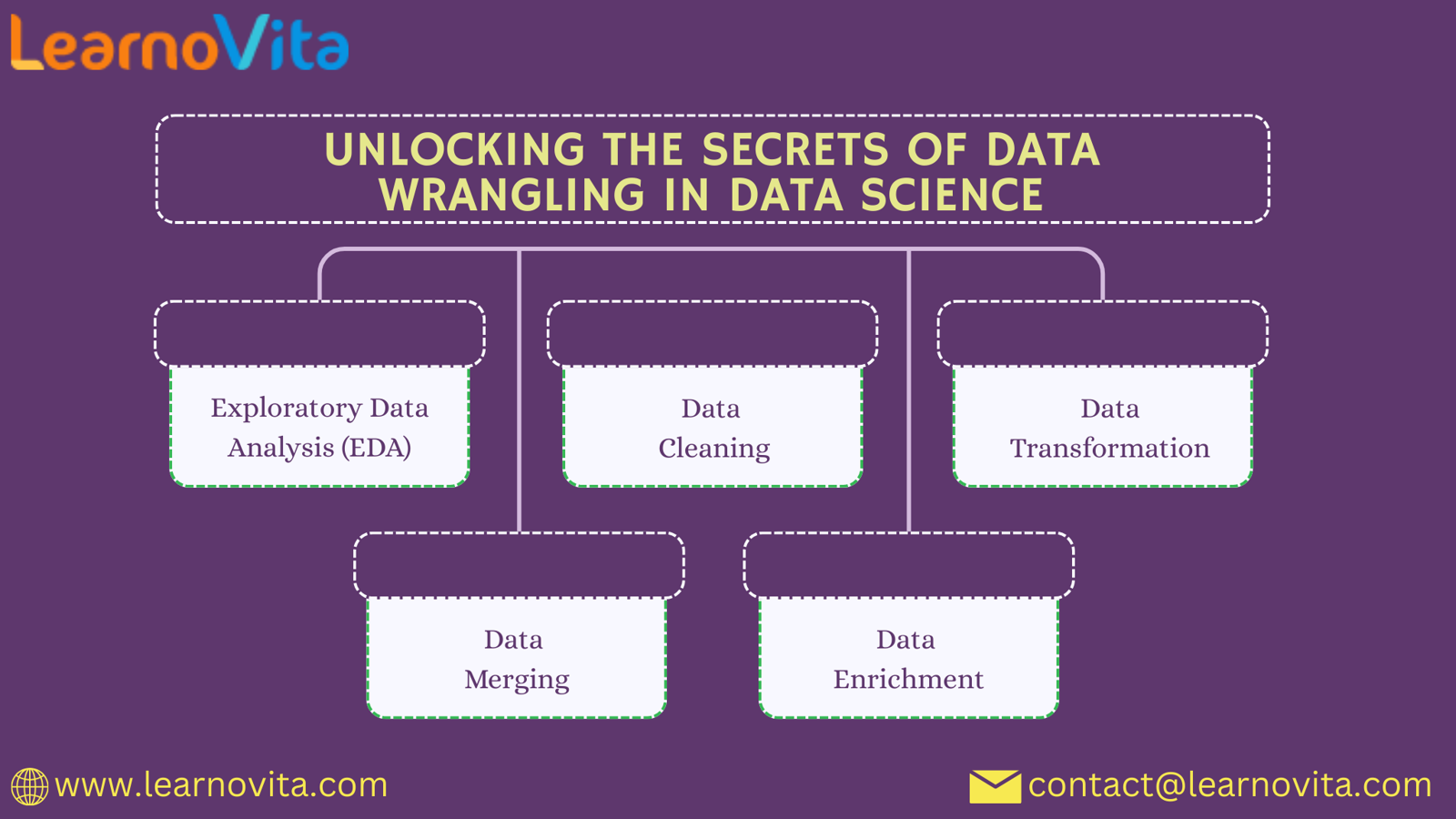
Key Techniques for Effective Data Wrangling
Exploratory Data Analysis (EDA):
Start your wrangling journey with EDA to gauge your dataset. Identify patterns and potential issues using summary statistics and visual tools.
Data Cleaning:
Handling Missing Values: Employ methods like imputation or deletion to address gaps in your dataset.
Removing Duplicates: Eliminate redundant entries to uphold data integrity.
Standardizing Formats: Normalize elements such as date formats and text casing for consistency.
Data Transformation:
Normalization: Scale numeric values to a common range, especially important for machine learning applications.
Encoding Categorical Variables: Convert categorical data to numerical formats like one-hot encoding for easier analysis.
Aggregation: Summarize data for higher-level insights, simplifying trend analysis.
Data Merging:
Use merging techniques to integrate datasets from different sources, forming a comprehensive dataset that enriches your analysis.
Data Enrichment:
Integrate external data sources to enhance the depth and richness of your analyses, providing broader insights.
With the aid of Data Science Certification Course programs, which offer comprehensive training and job placement support to anyone looking to develop their talents, it’s easier to learn this tool and advance your career.
Best Practices for Data Wrangling
Thorough Documentation: Keep detailed records of your wrangling processes, ensuring reproducibility and clarity.
Automate Where Possible: Utilize programming languages like Python or R to automate common tasks. Libraries such as pandas and dplyr can streamline your workflow significantly.
Select the Right Tools: Familiarize yourself with various data manipulation tools. Whether using Python, R, or Excel, the right tools can boost your efficiency.
Adopt an Iterative Approach: Treat data wrangling as a continuous process. Revisit and refine your methods as your dataset evolves.
Be Flexible: Stay adaptable in your wrangling strategies to accommodate changing business needs and varying data types.
Conclusion
Mastering data wrangling is not merely a technical skill; it is a fundamental aspect of effective data science. By investing time in developing your data wrangling abilities, you can unlock valuable insights and tackle complex problems.
Enhance your data wrangling expertise, and contribute to more informed, data-driven decisions within your organization. Embrace the journey of mastering data wrangling—the cornerstone of unleashing the potential of data science! Happy wrangling.
In the modern digital era, businesses are flooded with data from various sources. Every customer interaction and market trend generates valuable insights. Effectively utilizing this data through analytics is essential for making informed business decisions. Let’s delve into how data analytics is transforming decision-making across industries. If you want to excel in this career path, then it is recommended that you upgrade your skills and knowledge regularly with the latest Data Analytics Course in Chennai. 1. Empowering Decisions with Data Data analytics ensures that business decisions are rooted in factual insights rather than mere intuition. By examining historical data and identifying patterns, organizations can project future trends and behaviors, leading to more effective decision-making that enhances efficiency and profitability. 2. Spotting Market Trends Data analytics allows companies to detect and anticipate market shifts. By monitoring customer preferences and...
Graphic design is at the cusp of a revolution, driven by innovations that are transforming the way designers create, communicate, and connect with audiences. As we navigate this exciting landscape, it’s important to explore the emerging technologies and trends that are shaping the future of graphic design. Here’s a look at what lies ahead. If you want to excel in this career path, then it is recommended that you upgrade your skills and knowledge regularly with the latest Graphic Design course in Chennai. 1. Artificial Intelligence in Design Artificial intelligence is not just a buzzword; it’s a game-changer in the graphic design realm. AI-driven tools can analyze vast amounts of data, automate repetitive tasks, and even create design variations based on user preferences. By harnessing AI, designers can enhance their creativity and efficiency, enabling them to focus on more complex and strategic aspects of their work. 2. Augmented Reality (AR) and Virtual Reality (VR) AR ...
In the competitive landscape of modern business, effective financial management is essential for success. Among the crucial processes is bank reconciliation, and Workday’s advanced financial management system significantly eases this task. In this guide, we will cover the fundamental aspects of Workday Bank Reconciliation Training, its advantages, and effective practices for a streamlined reconciliation process. If you want to excel in this career path, then it is recommended that you upgrade your skills and knowledge regularly with the latest Workday Online Training. What is Bank Reconciliation? Bank reconciliation is the method of aligning a company’s internal financial records with its bank statements to ensure consistency and accuracy. This vital process helps identify discrepancies, prevent fraud, and maintain a clear view of cash flow. Why Choose Workday for Bank Reconciliation? Workday provides a cloud-based financial management solution that seamlessly integr...



Comments
Post a Comment