Enhancing Supply Chain Management Efficiency through Power BI Insights
- Get link
- X
- Other Apps
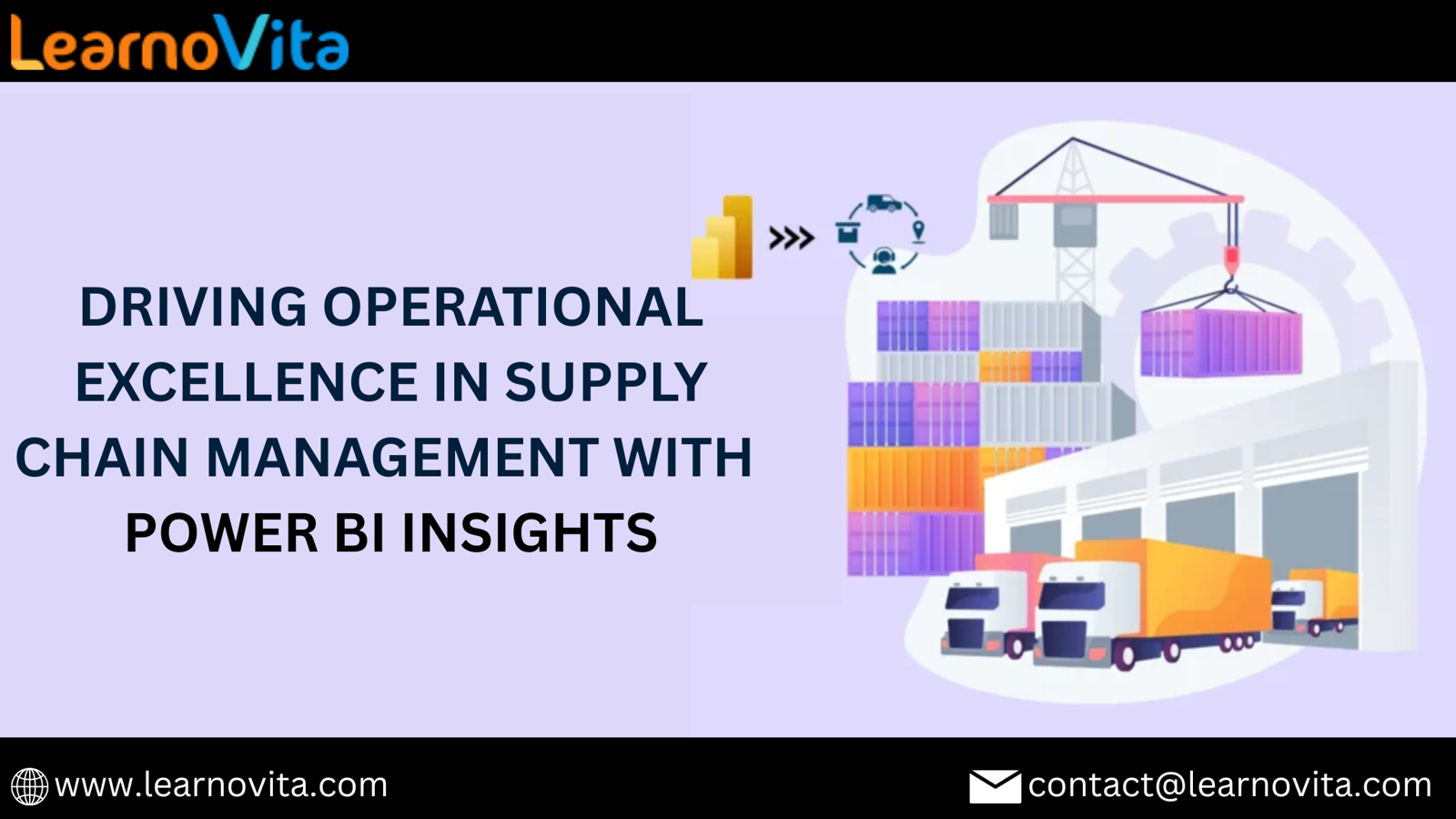
What is Operational Excellence in Supply Chain Management?
Operational excellence in SCM involves the ongoing enhancement of processes and practices to achieve superior performance. This encompasses optimizing critical components such as procurement, production, distribution, and customer service. By leveraging data analytics, companies can improve operations, reduce costs, and boost customer satisfaction.
The Power of Power BI
Power BI offers a user-friendly platform for data visualization and analysis, allowing organizations to derive meaningful insights from their supply chain data:
-
Instant Data Access: Power BI connects to multiple data sources, providing businesses with real-time information, which supports faster and more informed decision-making.
-
Engaging Dashboards: Interactive dashboards enable users to visually track data trends and patterns effectively. Stakeholders can dive deeper into the specifics without needing extensive technical expertise.
-
Predictive Capabilities: By harnessing machine learning features, Power BI helps forecast trends and behaviors, empowering organizations to anticipate supply chain disruptions and shifts in demand.
Essential Insights for Achieving Operational Excellence
1. Optimizing Inventory Management
Efficient inventory management is vital for minimizing costs and maximizing service levels. Power BI can assist businesses in:
- Identifying Slow-Moving Items: Analyze sales data to spot items with slow turnover, enabling timely decisions on clearance or reordering.
- Forecasting Demand: Leverage historical data to create forecasts, improving purchasing decisions and minimizing stockouts or overstock situations.
2. Evaluating Supplier Performance
Strong supplier relationships are pivotal to supply chain success. Power BI provides insights into:
- Supplier Reliability: Monitor delivery performance and lead times to compare reliable versus unreliable suppliers.
- Cost Efficiency: Assess costs linked to different suppliers, aiding in better negotiation or potential supplier switches.
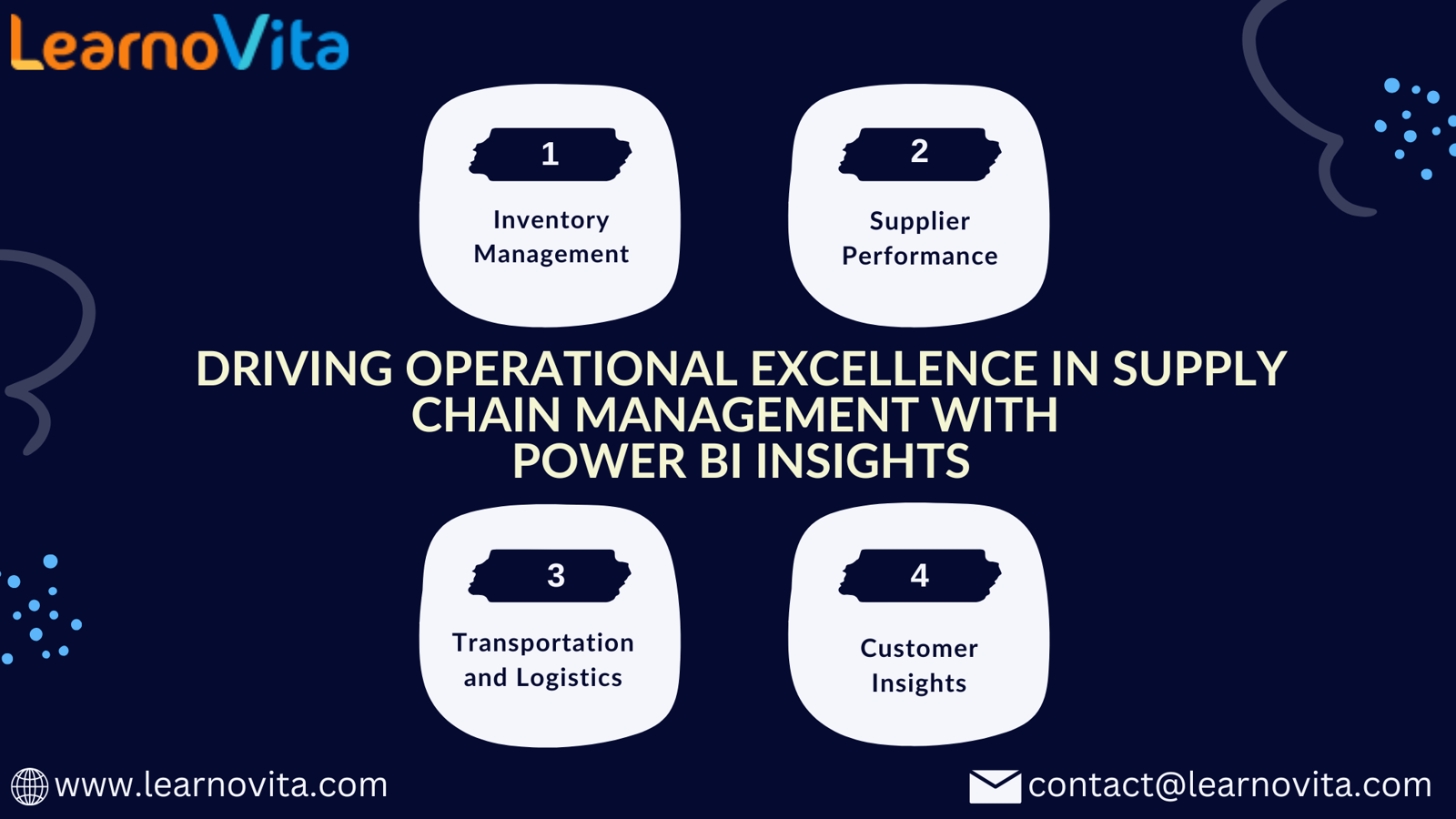
3. Streamlining Transportation and Logistics
Logistics costs can constitute a large portion of supply chain expenses. Power BI can help optimize logistics through:
- Route Optimization: Analyze delivery routes to reduce transportation costs and time.
- Shipment Tracking: Visualize shipment status in real-time for proactive customer communication regarding delays or issues.
4. Gaining Customer Insights
Understanding customer preferences is crucial for loyalty. Power BI can facilitate:
- Customer Segmentation: Analyze purchasing behavior to identify distinct customer segments for targeted marketing strategies.
- Analyzing Feedback: Monitor customer reviews and feedback to identify trends that can guide product development and service improvements.
Tips for Successful Implementation
To effectively utilize Power BI for achieving operational excellence in SCM, consider the following:
- Set Clear Goals: Establish specific objectives for the insights you wish to gain from Power BI.
- Integrate Data Sources: Ensure relevant data sources (e.g., ERPs, CRMs) are connected to Power BI for thorough analysis.
- Train Your Workforce: Invest in training to empower your team to make effective use of Power BI, democratizing data insights across departments.
- Continuously Review Metrics: Regularly monitor and adjust your KPIs to align with evolving business objectives and market dynamics.
Conclusion
Achieving operational excellence in supply chain management necessitates a commitment to data-centric decision-making. With Power BI’s advanced analytical features, organizations can gain valuable insights that lead to enhanced efficiency, reduced costs, and increased customer satisfaction. By adopting this powerful tool, companies can shift their supply chain operations from a reactive to a proactive stance, positioning themselves for sustained success in a competitive marketplace.
- Get link
- X
- Other Apps


Comments
Post a Comment