Navigating the Path to Stellar Software Testing Quality

The Significance of Software Testing
Why is Testing Essential?
Software testing verifies that applications operate correctly, are user-friendly, and are largely free from defects. High-quality software boosts user satisfaction, decreases maintenance costs, and builds trust in your brand.
Step 1: Set Clear Objectives
Begin by defining precise objectives for your testing processes:
- Determine the scope of your testing efforts.
- Establish quality standards and criteria for acceptance.
- Ensure alignment between testing goals and overall project objectives.
Step 2: Develop a Testing Strategy
Crafting a robust testing strategy is vital. Take into account:
- Testing Types: Manual testing, automated testing, performance testing, functional testing, and security testing.
- Tool Selection: Choose the testing tools that best meet your project needs, like Selenium for web applications or JUnit for Java applications.
- Test Environments: Establish suitable environments for accurate testing.
Step 3: Assemble a Talented Team
Building an effective testing team is crucial:
- Ongoing Training: Regular training sessions keep the team informed about the latest tools and techniques.
- Foster Collaboration: Encourage teamwork between developers and testers to pinpoint potential issues early.
Step 4: Utilize Test Automation
Automating tests can significantly enhance efficiency and consistency:
- Focus on Repetition: Target repetitive tasks for automation, especially during regression testing.
- Script Maintenance: Regularly update and maintain test scripts to reflect application changes.
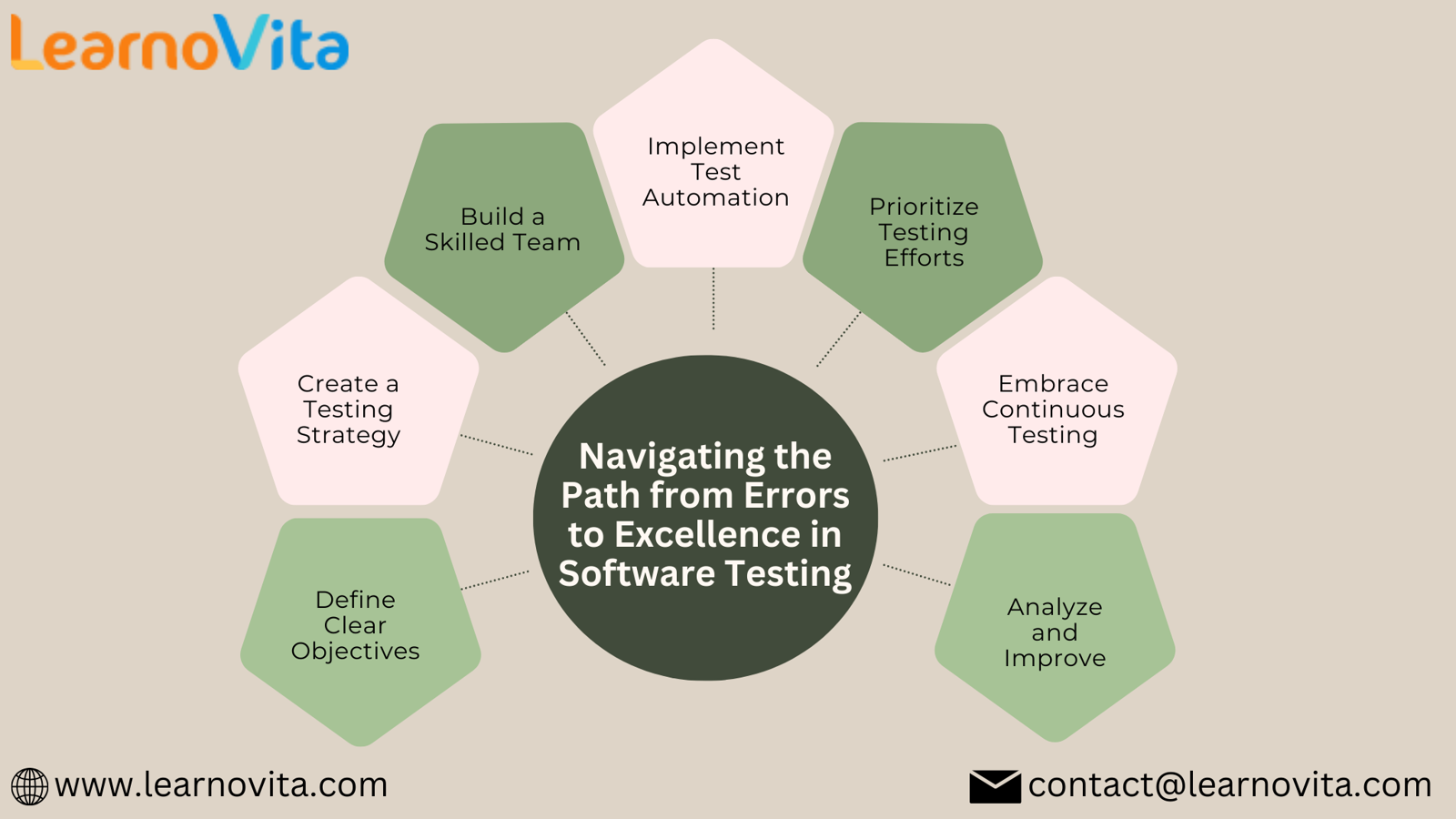
Step 5: Prioritize Testing Focus
Recognize that not all features carry the same weight. Employ risk-based testing to prioritize:
- Key Features: Concentrate on testing features essential for the application’s functionality.
- User Experience: Assess which features influence user satisfaction and experience.
Step 6: Adopt Continuous Testing
Incorporate testing throughout the development lifecycle:
- Integrate CI/CD: Embed testing into CI/CD processes to enable immediate feedback and faster releases.
- Regular Testing: Perform tests at every development stage to identify bugs early.
Step 7: Evaluate and Enhance
Collect metrics to assess your testing processes’ effectiveness:
- Defect Density: Compare the number of bugs discovered during testing with those found in production.
- Test Coverage: Analyze what portion of your code has undergone testing.
Utilize this data to continuously refine your testing methodologies.
Best Practices for Achieving Top-Notch Testing Quality
- Thorough Documentation: Keep detailed documentation for test cases, methodologies, and outcomes.
- User Input: Integrate user feedback into your testing criteria.
- Cultivate Quality Culture: Promote a culture that prioritizes quality across all teams involved in software development.
Conclusion
The pursuit of exceptional software testing quality is a continuous journey. By adhering to this roadmap, organizations can transform their testing processes from merely identifying bugs to fostering overall software excellence. Remember that quality software not only meets user needs but also cultivates lasting loyalty and success. Embrace these strategies for a transition from bugs to brilliance!


Comments
Post a Comment