The Essentials of Digital Marketing and How to Create an Effective Strategy
- Get link
- X
- Other Apps

What is Digital Marketing?
Digital marketing is the practice of using digital channels—such as social media, search engines, email, and websites—to connect with consumers and promote offerings. Unlike traditional marketing, it allows for real-time interactions, personalized messaging, and quantifiable results. Key elements include:
- Search Engine Optimization (SEO): Enhancing web content to improve its ranking in search engine results.
- Content Marketing: Producing and distributing valuable content to capture and engage an audience.
- Social Media Marketing: Utilizing social networks to promote products and interact with customers.
- Email Marketing: Sending targeted messages directly to clients’ inboxes.
- Pay-Per-Click Advertising (PPC): Running ads that charge a fee each time someone clicks, driving traffic to websites.
- Affiliate Marketing: Collaborating with individuals or companies to market products with a commission model.
How to Develop a Digital Marketing Strategy
Creating a structured digital marketing strategy can optimize efforts and enhance effectiveness. Here’s how to develop one:
1. Set Clear Objectives
Begin by defining specific, measurable goals. These could range from increasing website traffic, generating leads, boosting sales, or improving brand awareness. Use the SMART framework (Specific, Measurable, Achievable, Relevant, Time-bound) to clarify these objectives.
2. Identify Your Audience
Conduct thorough research to pinpoint your target market. Understand their preferences, behaviors, demographics, and the online platforms they frequent. This knowledge will help you customize your messaging and select the right channels.
3. Select Appropriate Channels
Based on your audience analysis, choose digital marketing channels that align with your goals. Options include:
- SEO and content marketing for lasting visibility.
- Social media for engagement and customer loyalty.
- Email marketing for direct outreach.
- PPC for immediate traffic generation.
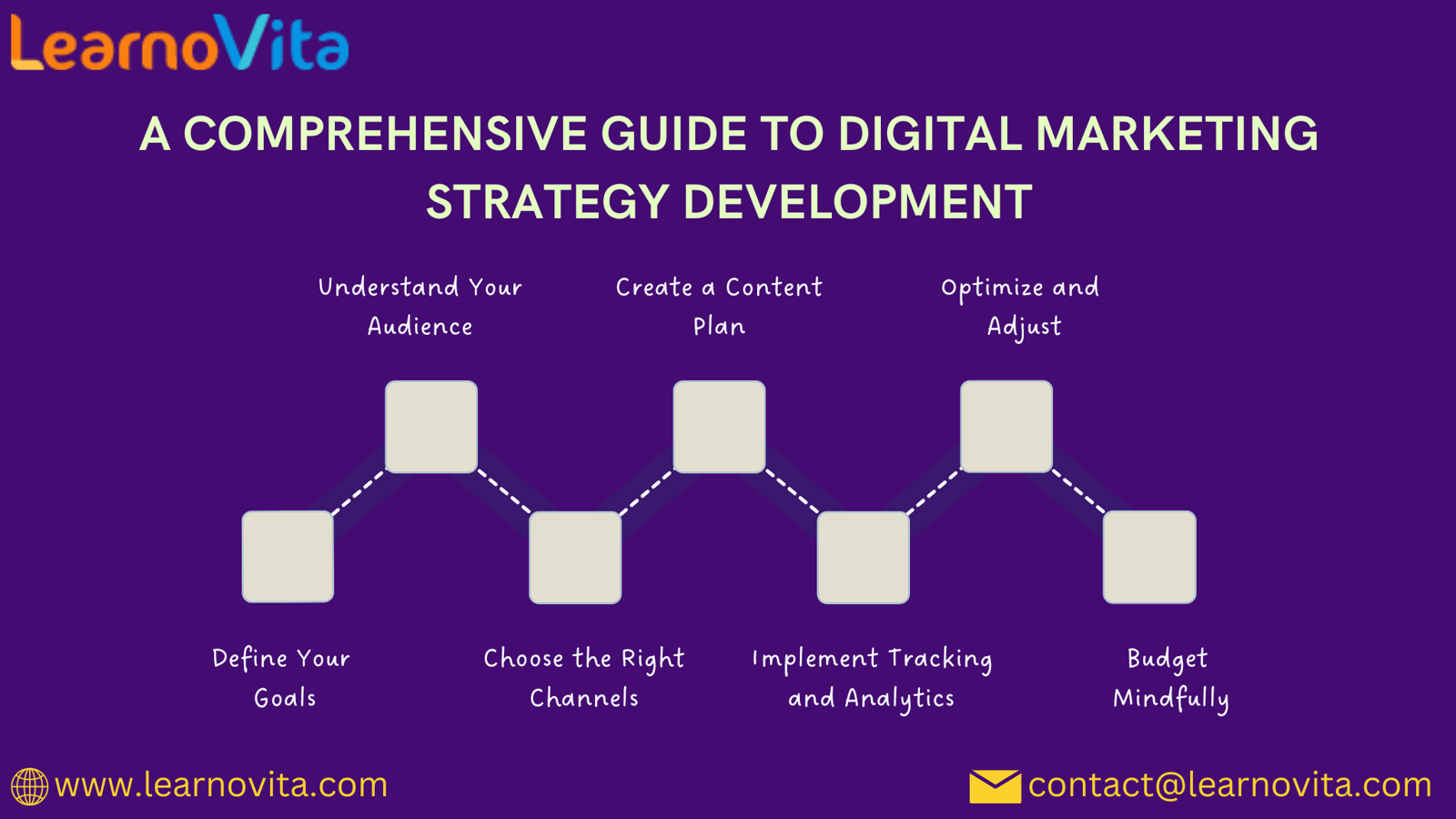
4. Develop a Content Strategy
Create a content calendar outlining the content to be produced, its timing, and its intended channels. Focus on generating high-quality, relevant content that meets your audience's needs. This may consist of blogs, videos, infographics, and social media posts.
5. Implement Tracking and Analytics
Leverage tools like Google Analytics, social media metrics, and email campaign data to monitor performance. Track key performance indicators (KPIs) such as website traffic, conversion rates, and return on investment (ROI) to assess success.
6. Refine and Adapt
Digital marketing is an ongoing endeavor that demands regular refinement. Consistently review your strategy based on analytics to make necessary adjustments for better performance and to adapt to shifting market dynamics.
7. Plan Your Budget Wisely
Establish a budget for your digital marketing initiatives. Allocate funds according to channel effectiveness and expected return on investment. Be ready to modify expenditures based on what proves most effective for your audience.
Conclusion
Digital marketing is a potent mechanism that allows businesses to connect with their audience in unprecedented ways. By crafting a comprehensive digital marketing strategy, companies can increase visibility, engage with customers, and foster growth. Given the ever-evolving nature of the digital landscape, ongoing learning and adaptability are key to maintaining a fresh and effective strategy.
- Get link
- X
- Other Apps


Comments
Post a Comment