A Deep Dive into SAP FICO and Notable SAP Modules

What is SAP FICO?
Financial Accounting (FI)
The FI module is responsible for the collection, processing, and management of financial data. It encompasses crucial accounting functions such as accounts payable, accounts receivable, asset accounting, general ledger maintenance, and financial reporting. By utilizing SAP FI, organizations can maintain compliance with regulatory standards and produce accurate financial statements.
Key Features:
- Real-time processing of financial transactions
- Seamless integration with other SAP modules
- Automatic financial statement generation
- Multicurrency support and localization options
Controlling (CO)
The CO module is focused on internal cost tracking and reporting. It aids organizations in monitoring costs related to various internal processes, facilitating better decision-making. Key activities in CO include budgeting, cost center accounting, internal orders, and profitability analysis.
Key Features:
- Comprehensive cost tracking and analysis
- Performance measurement through key performance indicators (KPIs)
- Extensive reporting tools for management insights
- Integration with production, sales, and other cost-related functions
Synergy of FI and CO
The interconnection between the FI and CO modules ensures a cohesive approach to both financial accounting and cost control. This real-time data sharing enables precise financial reporting and effective management of costs, contributing to an organization’s overall financial robustness.
Noteworthy SAP Modules
In addition to SAP FICO, the SAP suite includes various modules that cater to diverse business functions. Here are some popular options:
1. SAP MM (Materials Management)
Focused on procurement and inventory management, the MM module ensures efficient management of goods and materials throughout the supply chain.
It’s simpler to master this tool and progress your profession with the help of Best Training & Placement program, which provide thorough instruction and job placement support to anyone seeking to improve their talents.
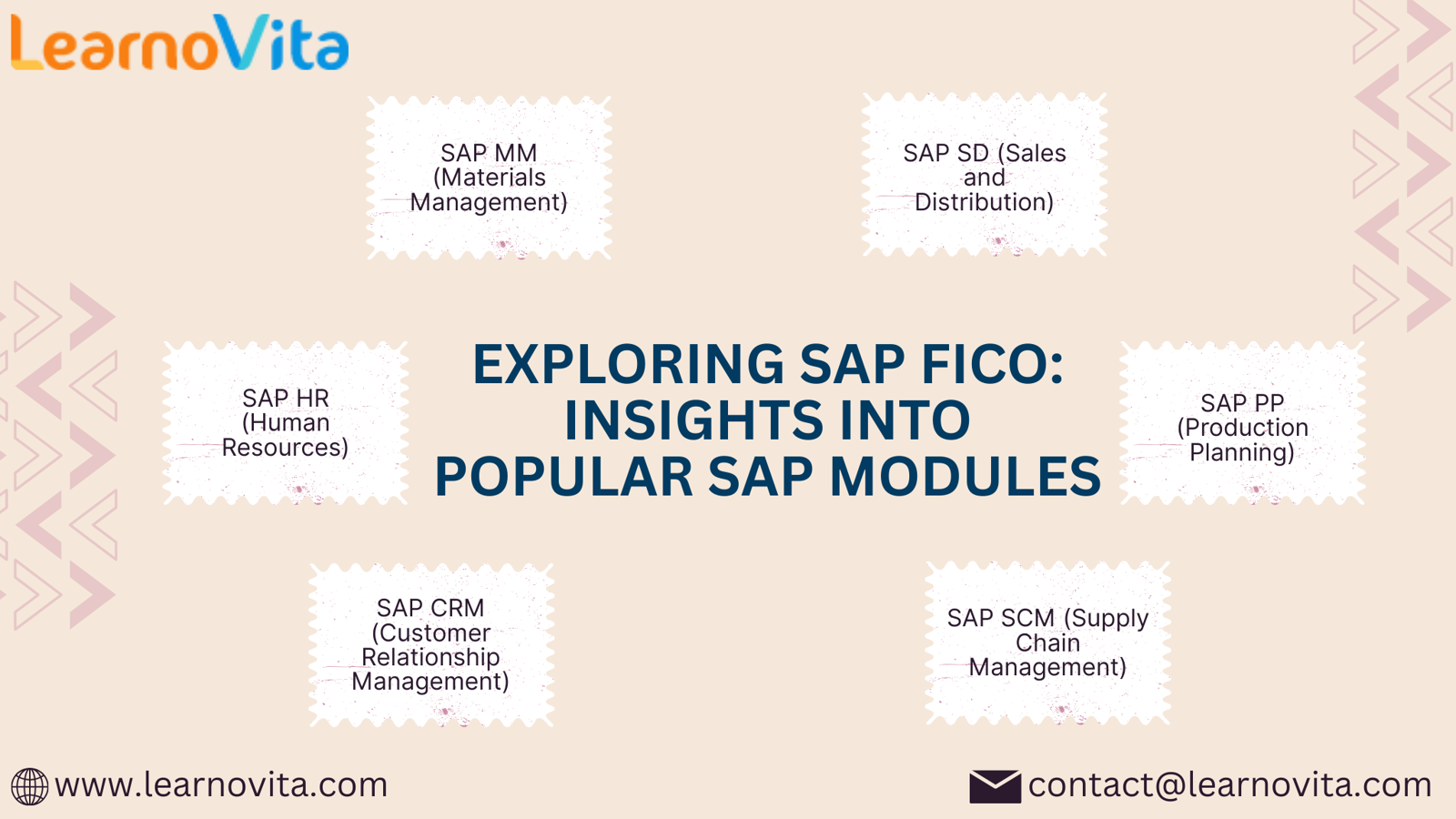
2. SAP SD (Sales and Distribution)
This module streamlines the sales process, managing order processing, shipping, billing, and enhancing customer relationships for increased satisfaction.
3. SAP HR (Human Resources)
The HR module oversees employee data and HR functions, including recruitment, payroll, performance evaluation, and development initiatives.
4. SAP PP (Production Planning)
This module aids organizations in managing production workflows, ensuring that operations align with demand forecasts and resource availability.
5. SAP CRM (Customer Relationship Management)
SAP CRM focuses on enhancing customer interactions and relationships, optimizing sales strategies, marketing efforts, and customer service.
6. SAP SCM (Supply Chain Management)
The SCM module supports efficient supply chain processes, encompassing logistics, demand planning, and inventory management to maximize performance.
Conclusion
SAP FICO is essential for effective financial data management within organizations. Coupled with various SAP modules that address distinct business needs, organizations can achieve greater operational efficiency, improved financial performance, and enhanced decision-making capabilities.
By adopting SAP's comprehensive suite of applications, businesses can gain a competitive advantage in an increasingly dynamic market. Whether in finance, sales, or supply chain management, there is a tailored SAP solution ready to meet the unique demands of your organization.


Comments
Post a Comment