A Beginner’s Guide to PCB Design: From Idea to Functional Board

What is PCB Design?
PCB design is the process of planning and arranging electronic components on a board so they can work together efficiently. It ensures proper electrical connections while also meeting mechanical and manufacturing requirements.
Step-by-Step PCB Design Process
1. Developing the Schematic
The design process begins with a schematic diagram, which represents the logical structure of the circuit.
Key activities:
- Selecting the required components
- Organizing them based on functionality
- Connecting them using symbolic representations
2. Component Selection
Choosing the right components is vital for the circuit’s performance and durability.
Factors to consider:
- Voltage and current specifications
- Physical size and packaging
- Cost and availability
- Operating reliability
3. Creating the PCB Layout
This stage converts the schematic into a physical board design.
What it involves:
- Placing components strategically
- Optimizing the use of available space
- Ensuring compatibility with the product design
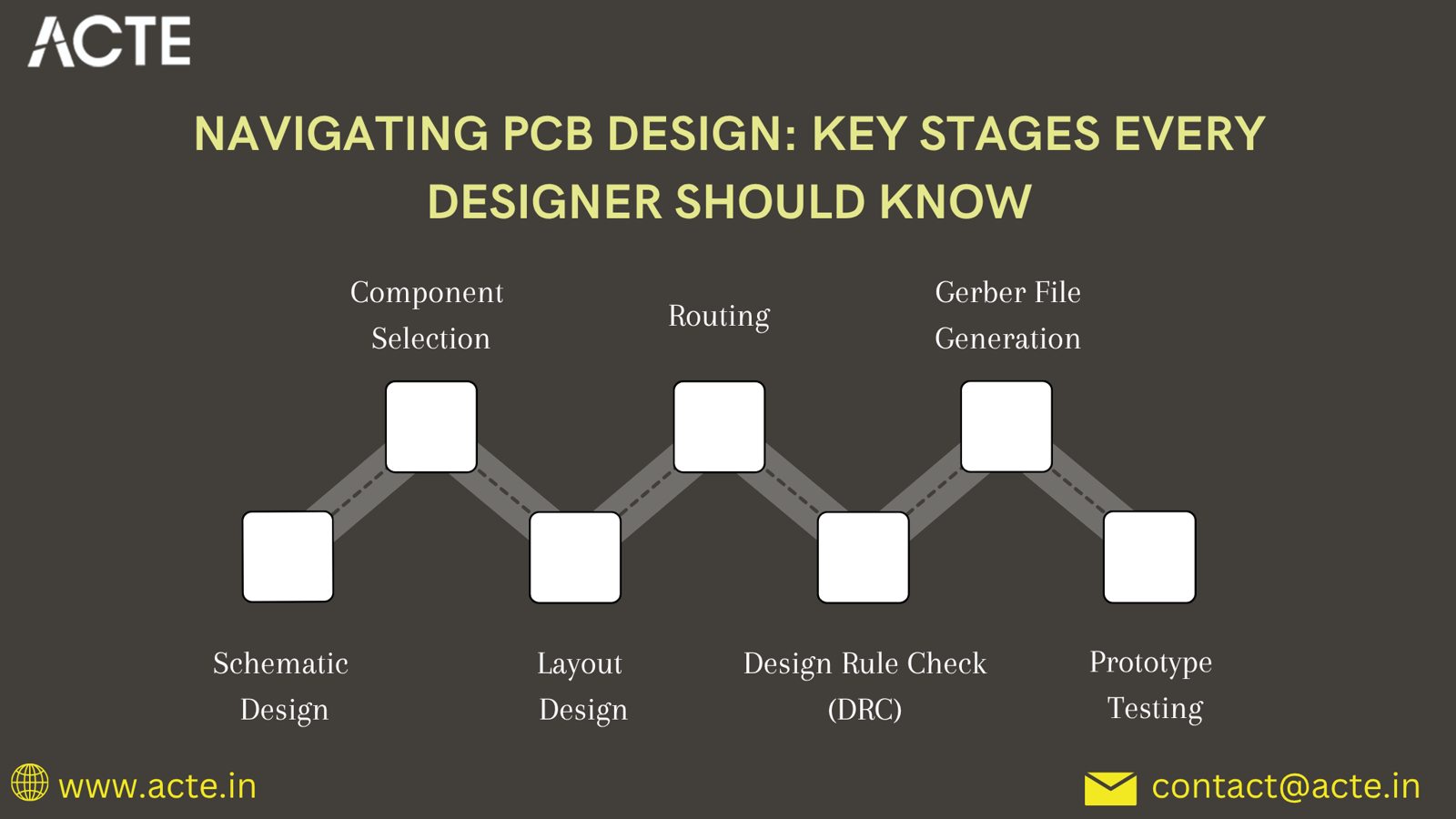
4. Routing the Connections
Routing involves creating conductive paths to connect components.
Important points:
- Maintaining appropriate trace width
- Reducing trace length for efficiency
- Minimizing noise and interference
5. Performing Design Rule Checks (DRC)
Before moving to production, the design is verified for errors.
This ensures:
- Proper spacing and dimensions
- Correct electrical connections
- Adherence to manufacturing standards
6. Generating Manufacturing Files
After validation, files required for production are created.
These include:
- PCB layer details
- Drill hole information
- Component placement data
7. Prototype and Testing
A prototype is built to test the real-world performance of the PCB.
The goal is to:
- Identify and fix issues
- Confirm proper functionality
- Improve the design before large-scale production
Conclusion
PCB design is a systematic process that requires accuracy and careful planning. By following each step, designers can create efficient and reliable circuit boards.
As technology continues to evolve, learning PCB design is a valuable skill that opens doors to many opportunities in the electronics industry.


Comments
Post a Comment